
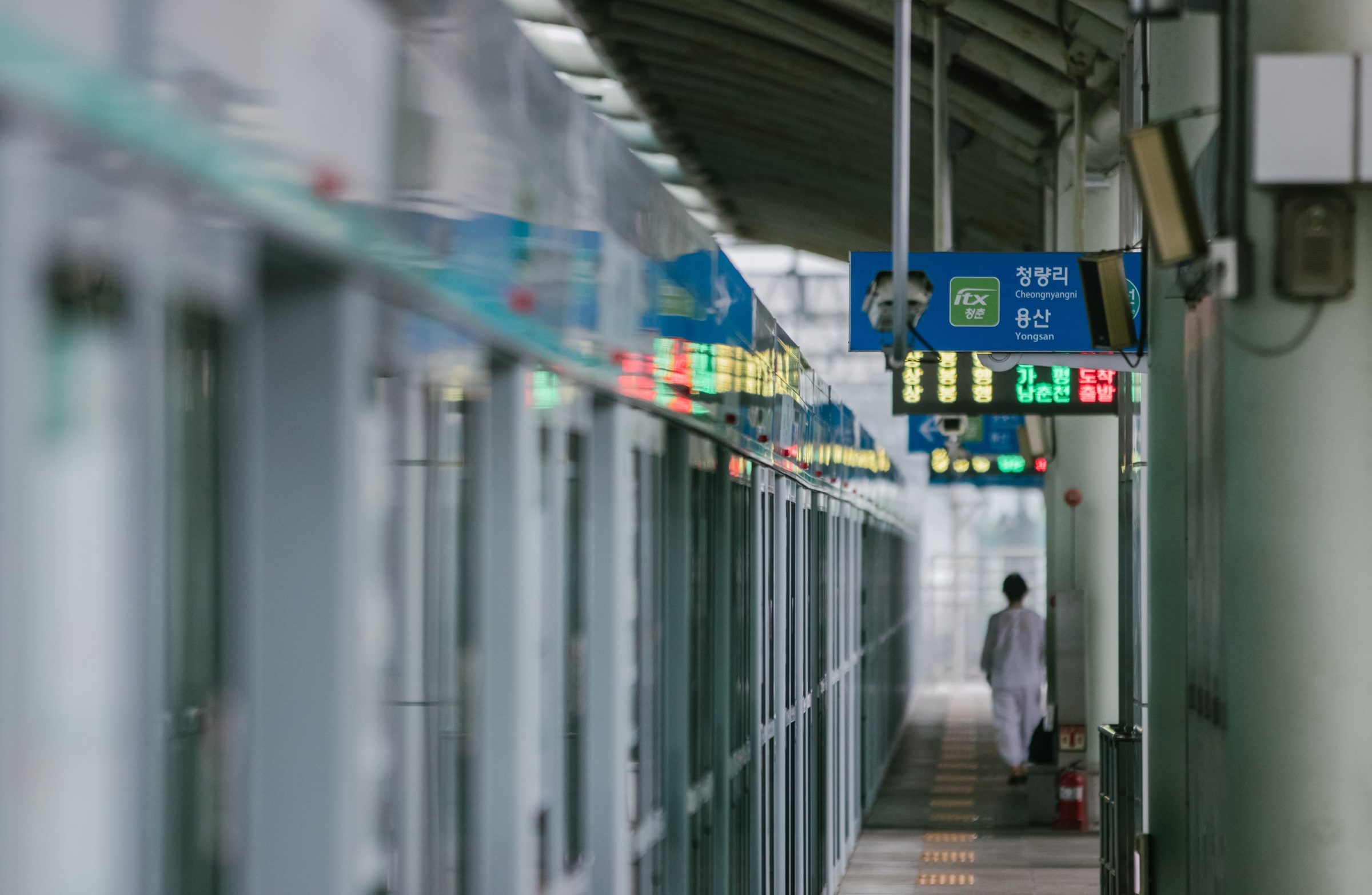
ITX-Cheongchun platform on the Gyeongchun Line, signs pointing to Cheongnyangni and Yongsan

Seoul Transport Guide · Move Like a Local

Getting Around Seoul: One Card, Five Ways

How the subway, buses, taxis, bikes and the river boat work in Seoul, what they cost, and which card to pick up when you land.

A note before you ride

I’ve been to a fair number of countries, and I still haven’t found a city where getting around is as cheap and easy as Seoul.

Lines reach almost every corner of the city, and you can change from the subway to a bus without paying again. My friends in Japan are always a little jealous of that one. It works like this mostly because Korea’s public transport was never fully privatised, so fares stay low and one card covers nearly everything.

It isn’t perfect. With a wheelchair or a stroller it’s harder than in Japan, and at some stations you’ll spend a while looking for the lift. I’ll point those out in the journal.

In March 2026 the Hangang Bus started running the whole length of the river, and since June it also stops in front of Seoul Forest. A boat ride on the Han for ₩3,000. I still can’t quite believe it.

So please make the most of it. Go a little further than you planned, and see as much as you can.

Jisup Shin

The line map

Five ways to get around Seoul

Five ways to travel around Seoul, from the subway you’ll ride every day to the boat you’ll take once. Tap one to jump to it.

Adult fares with a transit card, September 2026.

How it works

Six things to know before your first ride in Seoul

Nobody tells you these at the station. Locals just do them without thinking.

One card pays for everythingA T-money card works on the subway, city buses, most taxis and at convenience stores. It works in other Korean cities too.
Tap in, and tap outOn the subway the gates make you. On the bus nobody checks, so tap the reader by the back door when you get off. If you forget, you lose the transfer discount.
Transfers are free within 30 minutesYou can change up to four times on one fare, as long as you get on the next ride within 30 minutes of tapping out. From 21:00 to 07:00 you get 60 minutes.
You pay by distance, not by rideThe base fare covers the first 10 km of the whole journey, transfers included. After that it adds ₩100 for every 5 km.
Board at the front, leave at the backOn buses, get on by the driver and press the red stop button before your stop. A lot of buses don’t take cash anymore.
Keep top-ups in cashStation machines and convenience stores top up T-money with cash only. Keep a few ₩1,000 and ₩10,000 notes, or get the TTC+ card below, which you can top up in the app.

Example: three rides, one fare

SubwayHongdae → Euljiro 1-ga
tap out · 12 min
Blue busto Seongsu
tap out · 20 min
Green busto Seoul Forest
Paid as one journey by distance, not three separate fares.About ₩1,650

The card

Which Seoul transport card: T-money, TTC+ or Climate Card?

Every card here works across Seoul public transportation — subway, city buses and most taxis — and all three give you the free transfers. The difference is how you top them up and how much you ride.

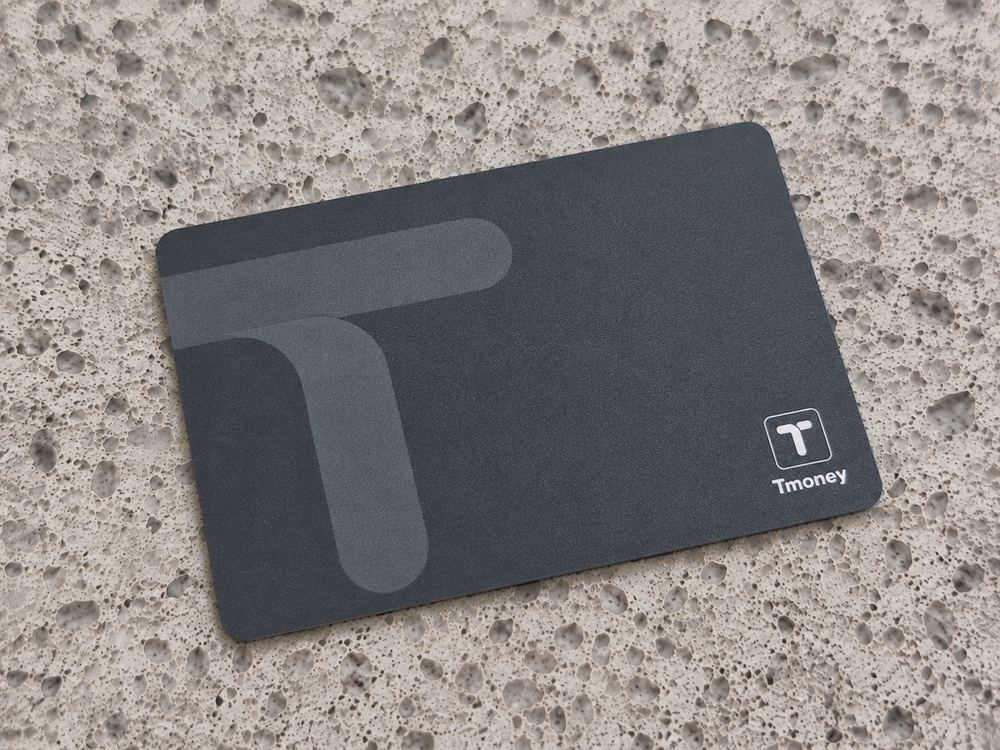
A plain charcoal T-money transit card on a stone surface

Pay as you go

T-money card

The standard card every local carries.

Card
A few thousand won
Top up
Cash
Works in
All of Korea
Extras
None
  • Also pays for taxis, convenience stores and coin lockers
  • Sold in dozens of designs, from plain cards to keyrings
  • Keep it: the balance is still there on your next trip

Choose it if you want the simplest card and do not mind carrying some cash.

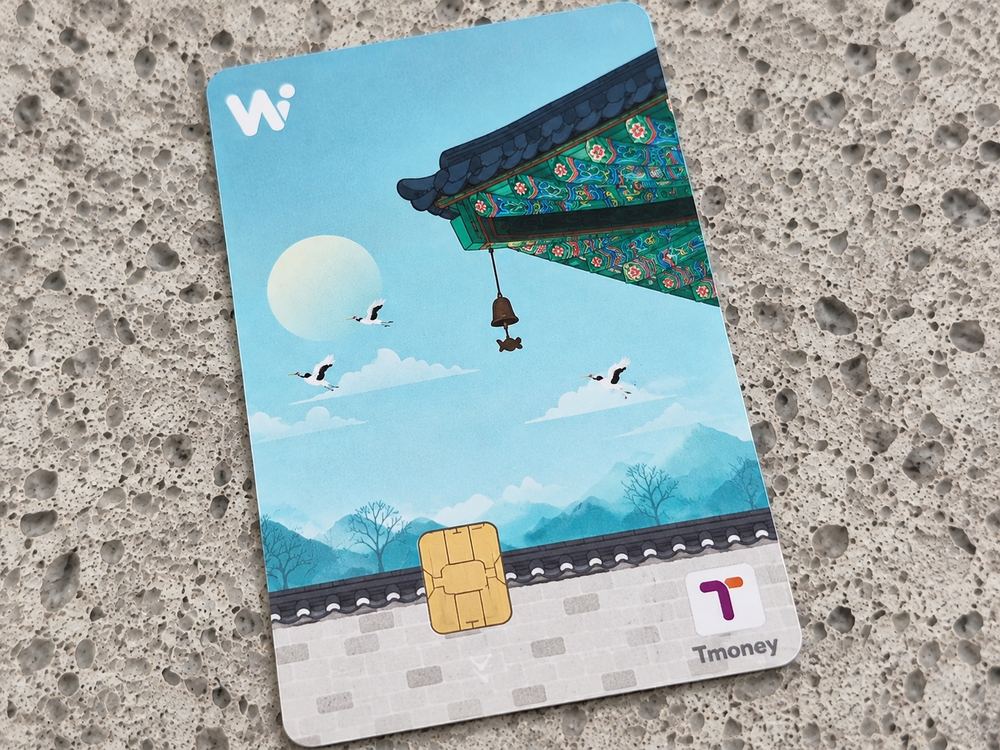
The Tmoney Travel Card Plus, illustrated with palace eaves, a wind bell and cranes over the mountains

Pay as you go · visitors

Tmoney Travel Card Plus New

T-money plus currency exchange, payment and shopping perks. Launched November 2025.

Card
₩6,000
Top up
App · overseas card
Works in
All of Korea
Extras
Shop & ticket discounts
  • Up to 5% back at Olive Young, Daiso and convenience stores
  • 6% back at the airport duty-free shops
  • 10% off N Seoul Tower · 30% off an Everland day pass

Choose it if you would rather not deal with cash, or you plan to shop.

Benefits as announced at launch. Check the app before you buy.

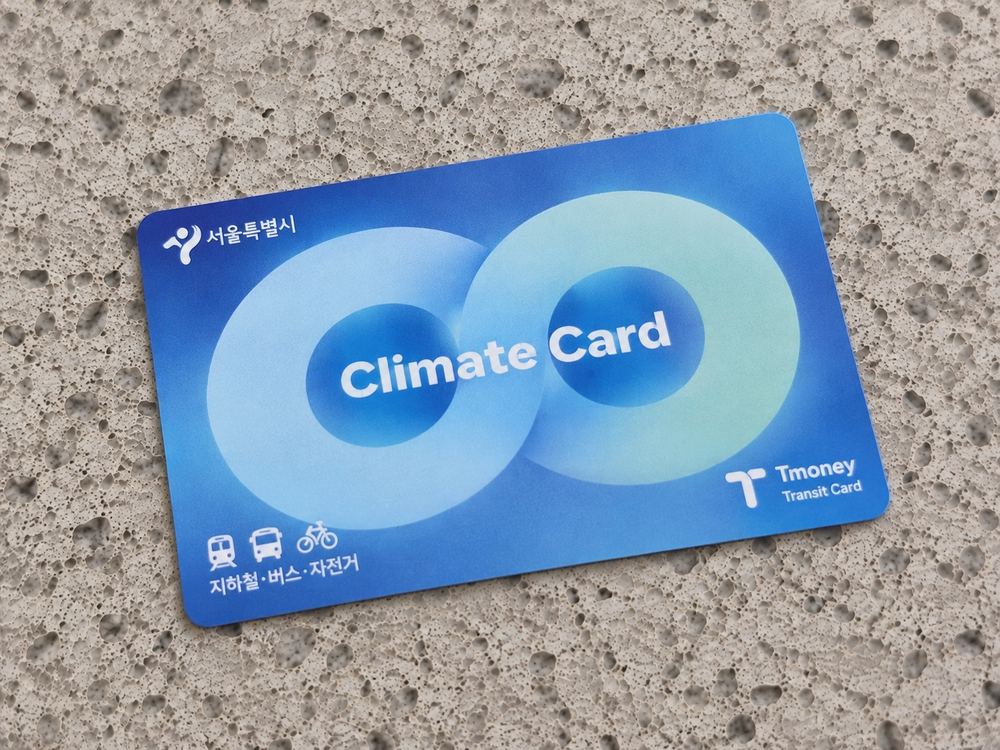
A blue Seoul Climate Card, valid on the subway, buses and Ttareungi bikes

Unlimited · Seoul only

Climate Card, short-term

Unlimited Seoul subway and city buses for a set number of days.

Day passes · won

1 day5,000
2 days8,000
3 days10,000
5 days15,000
7 days20,000
Card
+ ₩3,000
Top up
Buy days, not a balance
Not valid on
Shinbundang Line, Incheon Airport rail, red buses

Choose it if you ride more than three separate trips a day and stay mostly inside Seoul.

The only card here with unlimited rides. An attraction pass such as the Discover Seoul Pass may work as a transit card, but the fares still come out of the balance you load.

How to buy and top up a T-money card

  • BuyAt any convenience store (GS25, CU, 7-Eleven, emart24) or at the card machines in larger subway stations. Cards come empty, so you pay for the card and then load it.
  • Top upT-money and the Climate Card: the recharge machines in every subway station (English menu) or a convenience-store counter, cash only, in ₩1,000 steps. The TTC+ tops up in its app or at a kiosk with your own bank card.
  • UseSubway gates, bus readers, taxis, convenience stores and many vending machines, lockers and cafes. T-money and TTC+ work nationwide; the Climate Card only inside Seoul.
  • LeftoverConvenience stores refund small T-money balances for a fee of about ₩500. Or just keep the card for your next trip.

Any of these cards is ₩100 cheaper per subway ride than a single ticket, and single tickets never give you a bus transfer.

No card yet?

How to use a Seoul subway single journey ticket

Fine for your first ride, before you’ve had a chance to buy a card. Don’t skip the last step, where you get your ₩500 back.

  1. Find the machineMarked “Single Journey Ticket” near the gates. Tap English on the screen.
  2. Choose your stationSearch by name or line. The screen shows the fare.
  3. Pay fare + depositThe fare plus a ₩500 deposit. Cash works everywhere; cards at many machines.
  4. Tap in, tap outSame as T-money. Keep the card, because you need it again to get out.
  5. Get your ₩500 backDrop the card into the Deposit Refund machine next to the exit gates. A ₩500 coin drops out.
Basic fare₩1,650 + ₩500 deposit
Valid forOne trip, subway only, on the day you buy it.
Better for more than a dayA T-money card pays ₩100 less and adds free bus transfers.

Fares at a glance

Seoul subway, bus and taxi fares in 2026

Adult fares with a transit card. Children and teenagers pay less once their card is registered.

Seoul public transport fares for adults, September 2026
ModeFareHow it is charged
Subway & bus · free transfers between them
SubwayLines 1–9 and more₩1,550≈ US$1.2First 10 km, then ₩100 per 5 km. Single ticket ₩1,650.
Blue & green busTrunk and local routes₩1,500≈ US$1.1The city buses you will use most.
Village busSmall neighbourhood loops₩1,200≈ US$0.9Short hops up hills and into back streets.
Red busExpress to the suburbs₩3,000≈ US$2.3Seated express routes to Gyeonggi-do.
Night busN routes, around midnight to 05:00₩2,500≈ US$1.9Seoul’s “Owl” buses after the last train.
Door to door
TaxiRegular (orange, white, silver)₩4,800≈ US$3.6First 1.6 km, then ₩100 per 131 m or per 30 seconds in slow traffic. Night surcharge 20–40% from 22:00 to 04:00.
Scenic
Ttareungi bikeSeoul public bike₩1,000≈ US$0.8Day pass for 1 hour per ride; 2-hour pass ₩2,000.
Hangang BusRiver ferry₩3,000≈ US$2.3Flat fare per ride, any distance.

Station by station

Subway, bus, taxi, bike and river: a closer look

The basics for each one. The step-by-step version is in each journal.

No. 01

Subway

지하철 · jihacheol

The one you’ll use most. Clean, on time, with signs in English.

Every line has a number and a colour, and every station has a number too. Announcements are made in Korean, English, Chinese and Japanese. Trains run from about 05:30 to midnight.

Fare
₩1,550
Runs
About 05:30 – 24:00
Pay with
T-money or single ticket
  • The pink seats are for pregnant women, so leave them free.
  • Check the exit number before you go up. It can save you a long walk.
No. 02

Bus

버스 · beoseu

Slower than the subway, but you see the city on the way, and it goes where trains don’t.

The colour tells you the job: blue buses cross the city, green ones serve a district, red ones run express to the suburbs and small village buses climb the hills. Stops show live arrival times.

Fare
₩1,500
Night buses
N routes, ₩2,500
Pay with
T-money (many buses take no cash)
  • Tap out at the back door, even on a single ride.
  • Naver Map and KakaoMap show buses in real time; Google Maps does not.
No. 03

Taxi

택시 · taeksi

These days most people call a taxi instead of waving one down.

So many taxis are booked by app now that finding a free one on the street can take a while. Koreans use Kakao T. For visitors I’d suggest k.ride, Kakao Mobility’s app for foreign travellers. You sign up with Google, Apple or email, pay with an overseas card, and see the estimated fare before you book.

Street taxi? Check the meter is on미터기 켜 주세요.“Please turn on the meter.” (mi-teo-gi kyeo ju-se-yo)
Base fare
₩4,800 / 1.6 km
Night
+20–40%, 22:00 – 04:00
Book with
k.ride · Kakao T
  • Show the driver your destination in Korean. A screenshot of the map pin works fine.
  • Cards and T-money are accepted in almost every taxi.
No. 04

Bike

따릉이 · ttareungi

You’ll see the green-and-white bikes all over the city. An hour costs ₩1,000.

Ttareungi, Seoul’s public bike, is at its best along the Han River paths. Buy a pass in the Seoul Bike app with an overseas card, unlock with the QR code and return to any station. Other cities have their own: Tashu in Daejeon is free for the first hour.

1-hour pass
₩1,000
2-hour pass
₩2,000
Rent in
Seoul Bike app
  • Return within the hour; going over adds a charge.
  • Helmets are provided at some stations only.
No. 05

River

한강버스 · Hangang Bus

Not the quickest way across town, but the nicest.

The Hangang Bus is a river ferry that works like a bus: tap your card and ride between piers from Magok in the west to Jamsil in the east. The full route opened in March 2026, and a stop at Seoul Forest followed in June.

Fare
₩3,000
Pay with
Transit card
Best at
Sunset
  • Departures are still far apart; check the timetable first.
  • A weekend fare rise is under discussion for 2027.

Worth a detour

Hangang Bus: a boat ride for the price of a bus

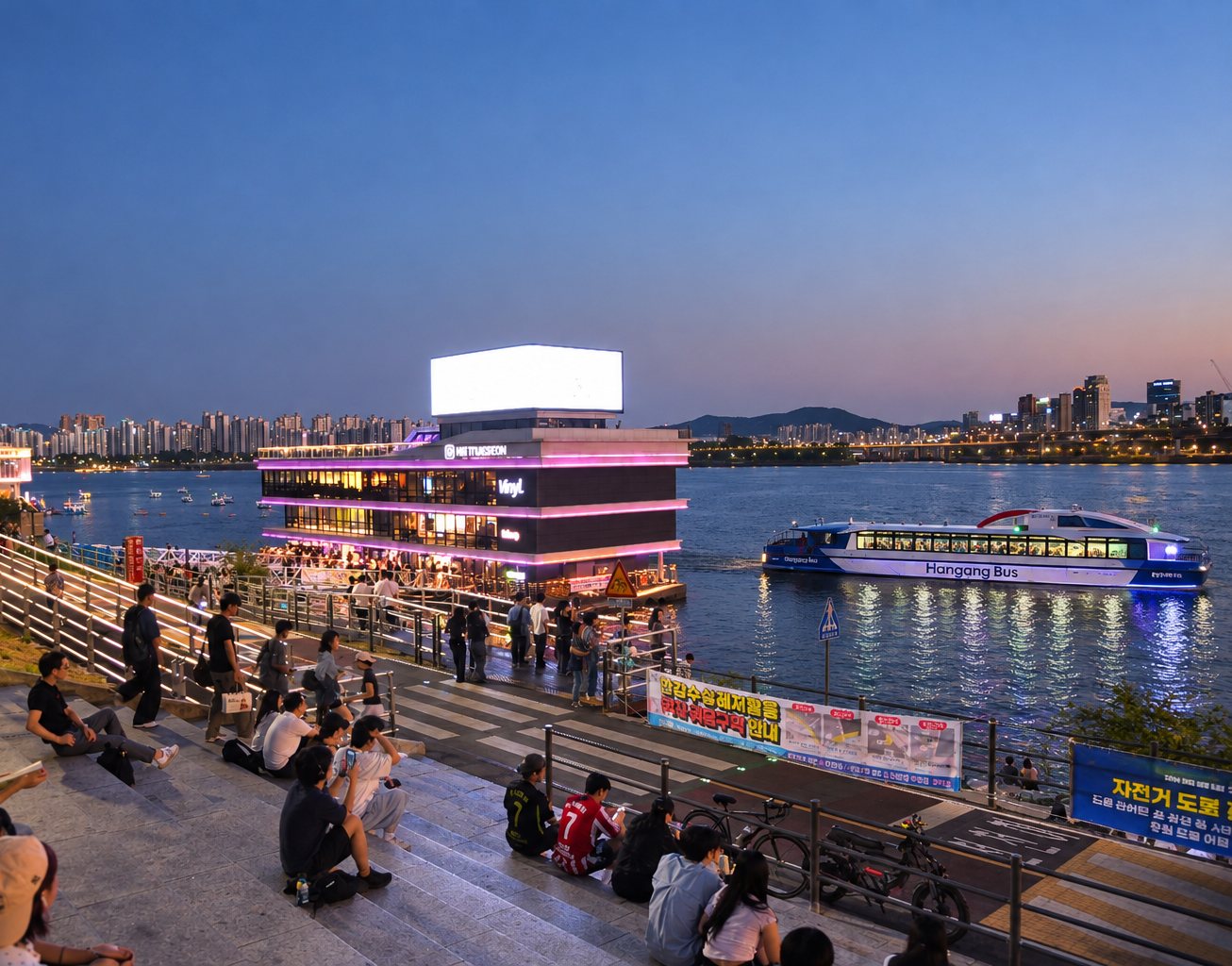
A Hangang Bus ferry passing Ttukseom pier at dusk while people sit on the river steps
Ttukseom pier, just after sunset

The Hangang Bus

You get on at a pier, tap your card and sit by the window while the bridges go by. It’s slow, but go late in the afternoon and it’s one of the nicest hours you can spend in Seoul.

MagokSeoul Forest · newJamsil

Flat ₩3,000 a ride, August 2026. Timetables change often, so check before you go.

Good to have

More tips for getting around Seoul

What I’d tell a friend coming to Seoul for the first time.

Before you ride

Use a Korean map app

Google Maps works for trains and buses in Korea but struggles with walking and driving directions. Locals use Naver Map or KakaoMap. Both have English menus, live bus arrivals and tell you which exit to take.

  • Search in English, then save the Korean name of the place.
  • Both apps show which subway car stops closest to your transfer.

After midnight

Last trains and the Owl buses

Most subway lines send their last trains around midnight, a little earlier at weekends and on holidays. After that, N buses (“Owl” buses) cover the main corridors until about 05:00 for ₩2,500, and taxis add a 20–40% night surcharge.

  • Check your last train in the map app before dinner, not after.
  • From 21:00 to 07:00 the transfer window is 60 minutes.

Bags, strollers & wheelchairs

Lockers and step-free routes

Larger stations have coin lockers you can pay for with a card or T-money. Useful after check-out if your train is later in the day. Almost every station has a lift now, but usually not at every exit. Check the station map by the gates for the lift symbol before you choose an exit.

  • Avoid 08:00–09:00 and 18:00–19:00 with big cases.
  • Stuck? The staff window by the gates will point you to the lift.

Passes & help

Tourist passes and numbers to save

The Discover Seoul Pass bundles entry to 70+ attractions and can work as a transit card, but it does not make buses and the subway free. You top it up like a T-money card and each ride comes off that balance. Hop-on hop-off tour buses loop the palaces and Namsan from Gwanghwamun.

  • 1330: Korea Travel Hotline, 24 hours, in English and other languages.
  • Lost112: the national lost-and-found site, for anything left on a train, bus or taxi.

FAQ

Seoul transport FAQ: your questions answered

Short answers. The journal has the long ones.

How do I pay for the subway and bus in Seoul?

With a T-money card. Buy one at any convenience store or at card machines in larger subway stations, top it up with cash, and tap it on the reader when you get on and off. Foreign visitors can also use the Tmoney Travel Card Plus (TTC+), which tops up in an app with an overseas card.

How much is the Seoul subway fare in 2026?

An adult subway ride costs ₩1,550 with a transit card for the first 10 km, plus ₩100 for every extra 5 km. A single journey ticket costs ₩1,650 plus a ₩500 deposit that you get back at the station.

How does the free transfer work in Seoul?

Tap out when you get off, then tap in on the next subway or bus within 30 minutes (60 minutes between 21:00 and 07:00). You can change up to four times and pay one fare based on the total distance.

How do I get my deposit back on a single journey ticket?

After you exit the gates, put the card into the Deposit Refund machine next to them. It returns a ₩500 coin.

Is the Climate Card worth it for tourists?

The short-term Climate Card gives unlimited rides on Seoul subway and city buses for 1, 2, 3, 5 or 7 days, from ₩5,000 for one day plus ₩3,000 for the card. It pays off if you make more than about three separate trips a day inside Seoul. It is not valid on the Shinbundang Line, the Incheon Airport railroad or red express buses.

How do I call a taxi in Seoul as a foreigner?

Use k.ride, Kakao Mobility's app for foreign visitors. You can sign up with Google, Apple or email, pay with an overseas card and see the estimated fare before booking. Seoul taxis start at ₩4,800 for the first 1.6 km.

Does the Discover Seoul Pass include free public transport in Seoul?

No. It covers entry to attractions and can work as a transit card, but subway and bus rides are not free: you load money onto it like a T-money card and every fare comes off that balance. The short-term Climate Card is the only pass here with unlimited rides.

How much is the Hangang Bus in Seoul?

The Hangang Bus river ferry costs a flat ₩3,000 per ride. The full route along the Han River opened in March 2026, with piers from Magok in the west to Jamsil in the east, including Seoul Forest since June 2026.

Journal

Seoul transport journal: notes from the road

Step-by-step guides to Seoul’s subway, buses, taxis, bikes and river boats.

Adult fares with a transit card in Seoul, last checked August 2026. Verify before travel. Dollar figures are approximate, at ₩1,328 to US$1 (reference rate of 20 October 2026).

Scroll to Top