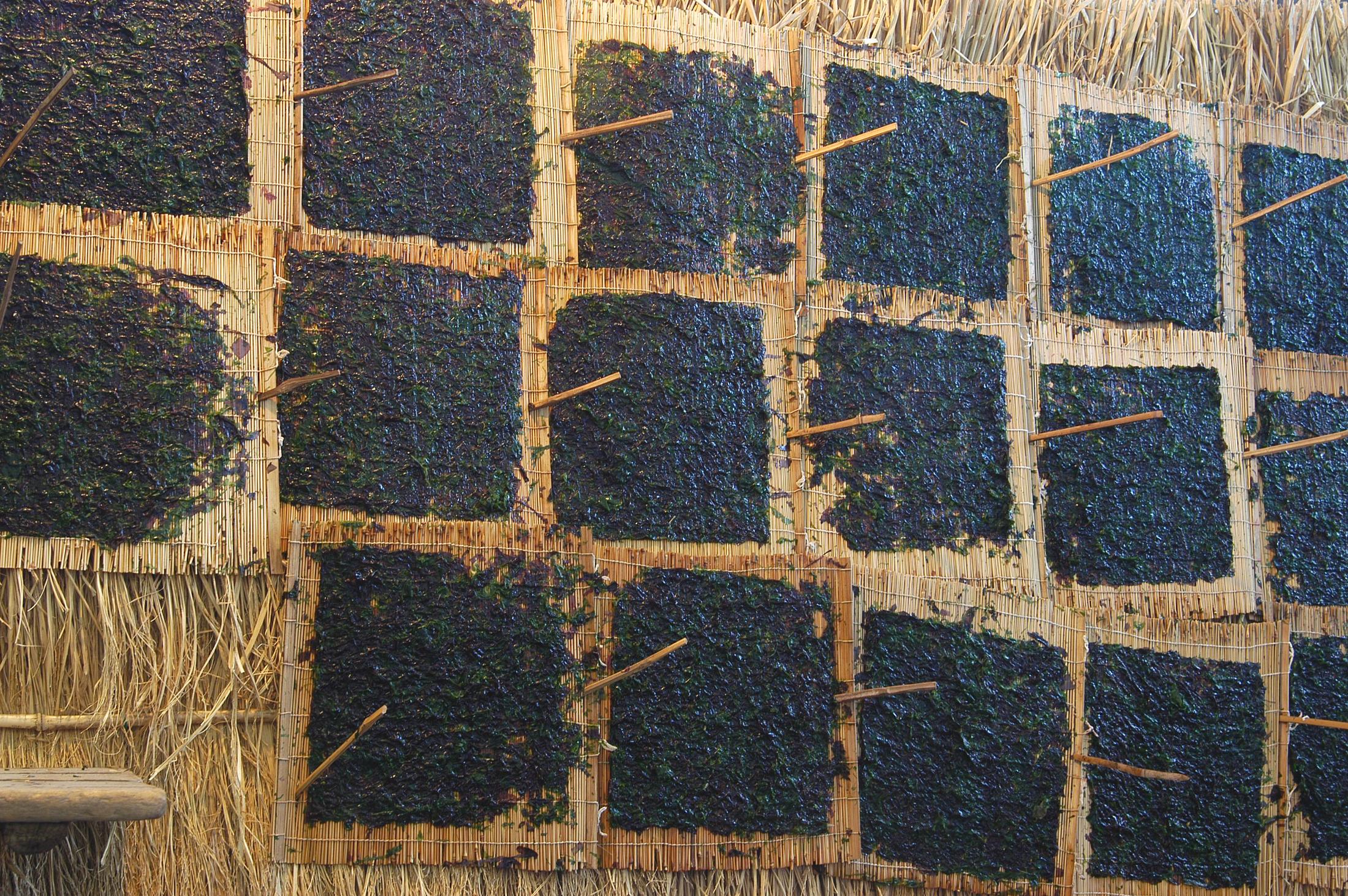
Sheets of gim, Korean laver seaweed, pressed onto bamboo mats and propped against a straw wall to dry in the wind
← Gastronomy

Korean Food by IngredientOne ingredient,
a hundred dishes

Soybeans, chili, beef and mountain greens: a handful of homegrown ingredients, and the slow Korean ways of fermenting, drying and waiting that turn each one into a whole family of dishes.

Scroll Down

Gim김 Laver seaweed from the winter sea, spread thin on bamboo mats and left to the wind and sun until each sheet is dry — slow food at its simplest.

A letter from the Korean pantry

Come and taste the food Korea is still willing to wait for.

Korea built an enormous table from the few things that grow here, and because industrialisation came late, slow food — fermenting, drying, aging, waiting — never left everyday life. It isn’t a trend here. It is simply how the food still tastes.

The gim in the photo above dried sheet by sheet in the winter wind. Soybeans wait months as meju before they become doenjang and ganjang, and chilies dry in the autumn sun before they become gochugaru. While you are here, eat at least one thing that took a season to make. Slow down for one meal, and Korea will taste different.

Jisup Shin

The Korean pantry

What to eat in Korea, ingredient by ingredient

Four ingredients the Korean kitchen can’t do without. Learn to spot them, and half the menu starts to make sense.

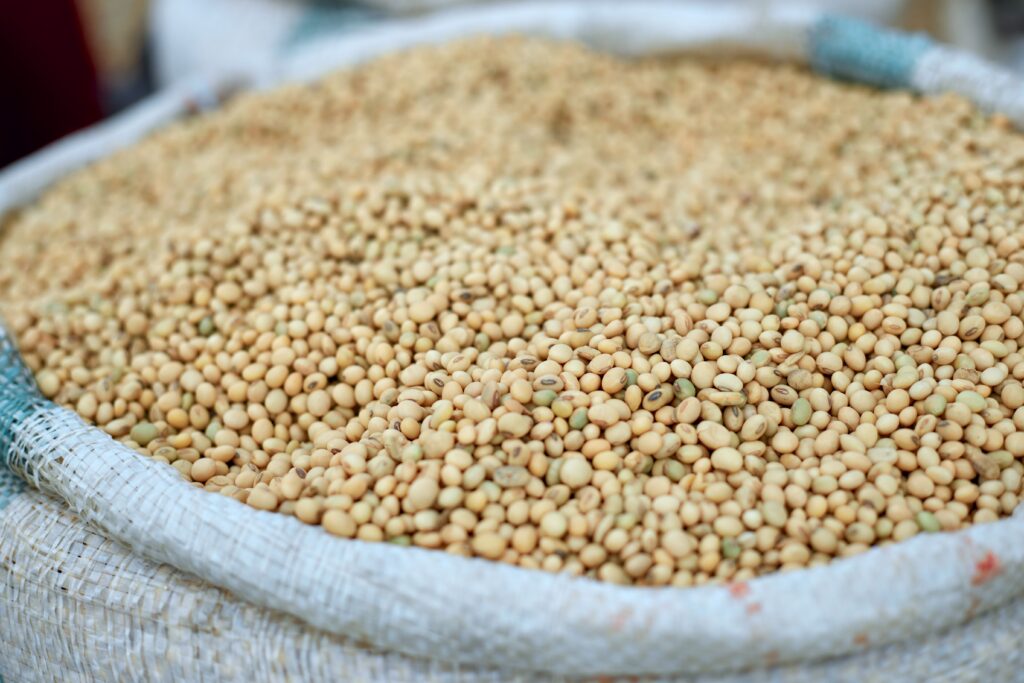
Dried Korean soybeans in a sack at the market

Legume · the root of jang

Soybean in Korean food

콩 · kong

If Korean food has a foundation, it is the soybean. Boiled, pounded and hung to ferment as Meju, it becomes the three jang behind almost every dish: Doenjang (soybean paste), Ganjang (soy sauce) and, mixed with chili, Gochujang.

Fresh, it turns into soft Dubu (tofu), crunchy Kongnamul sprouts, and in summer the chilled, nutty noodle soup Kongguksu. Brave eaters should try Cheonggukjang, a quick-fermented stew with a famously strong smell.

  • Doenjang-jjigae
  • Sundubu
  • Kongguksu
  • Kongnamul-gukbap
  • Cheonggukjang
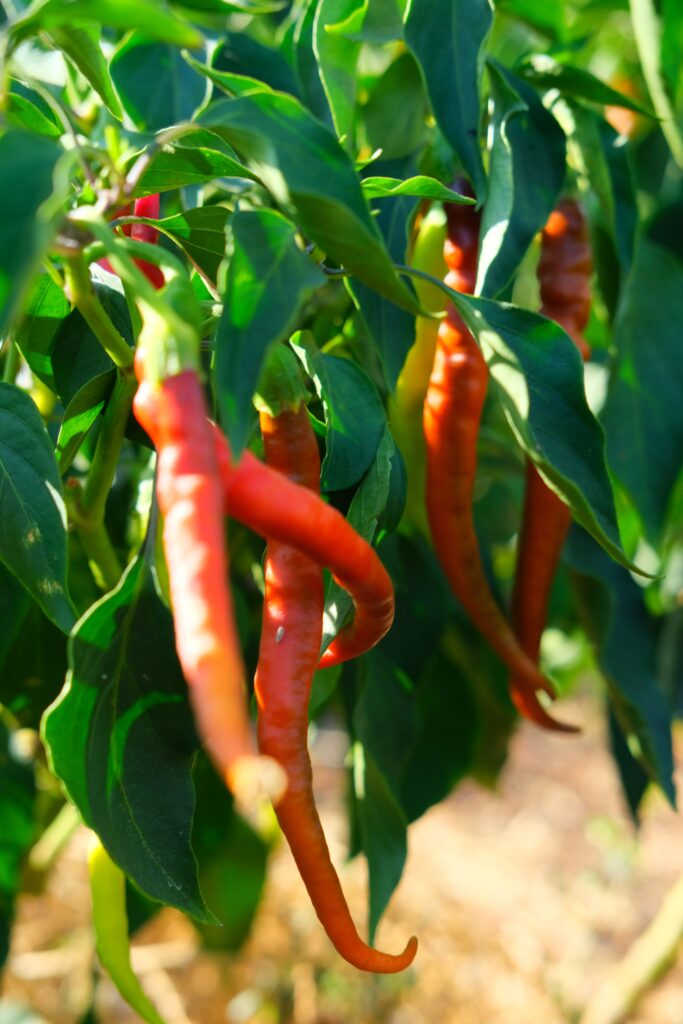
Red chili peppers ripening on the plant

Spice · the colour of the table

Red chili in Korean food

고추 · gochu

Chili reached Korea only a few centuries ago, yet it is hard to picture the table without it. In late summer the peppers are picked red and dried in the sun until they turn glossy and brittle, then ground into Gochugaru, the flakes that give kimchi its colour.

Fermented with rice and soybean, it becomes Gochujang, sweet, deep and slow-burning. Green chilies are eaten raw, dipped in doenjang, alongside grilled meat.

  • Kimchi
  • Tteokbokki
  • Kimchi-jjigae
  • Bibimbap
  • Gochu-jangajji
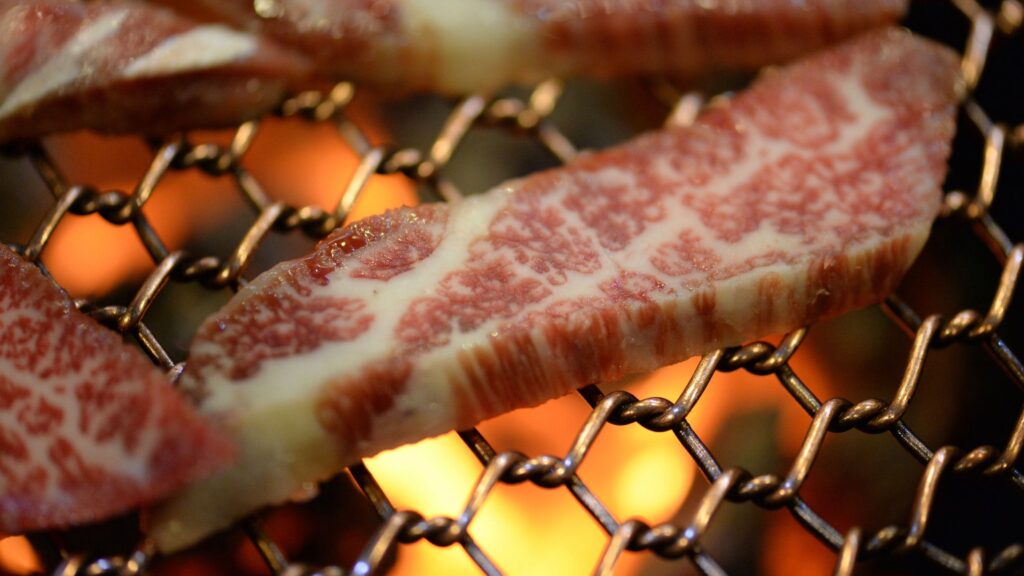
Marbled Hanwoo Korean beef grilling over charcoal

Meat · Korea’s native cattle

Hanwoo beef in Korean food

한우 · hanu

Hanwoo is Korea’s own cattle breed, prized for fine, even marbling and graded from 1++ down to 3. The best cuts are grilled simply over charcoal at the table, with nothing more than salt and sesame oil, so the beef can speak for itself.

The rest of the animal goes into long-simmered soups like milky Gomtang, marinated Bulgogi and Galbi, and Yukhoe, a raw beef dish dressed with pear and egg yolk.

  • Hanwoo gui
  • Galbi
  • Bulgogi
  • Gomtang
  • Yukhoe
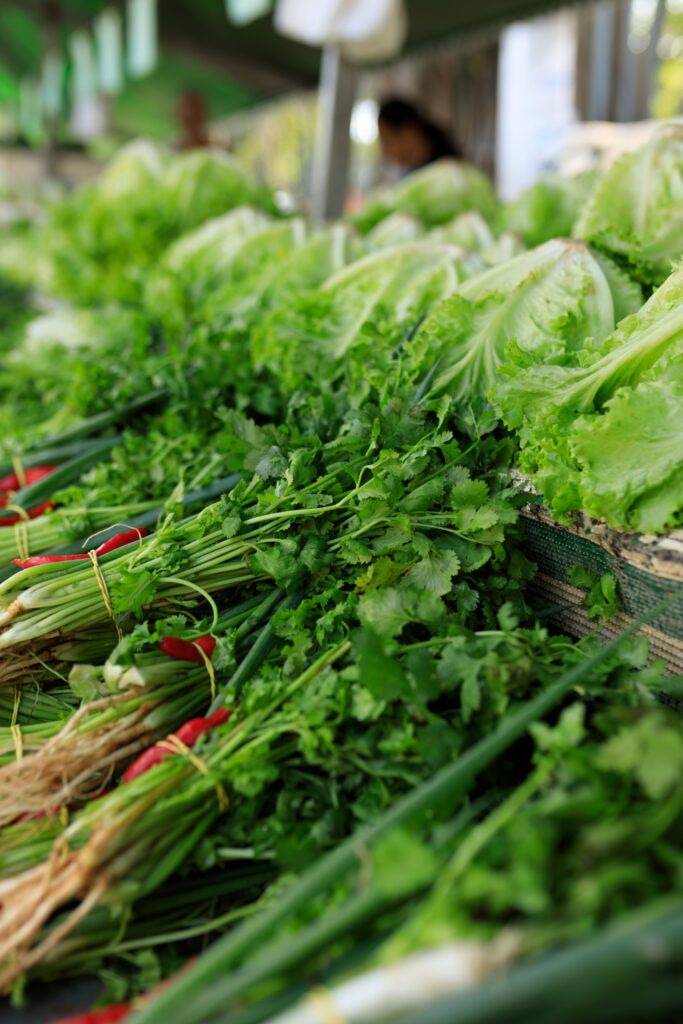
Fresh greens and vegetables stacked at a Korean traditional market

Greens · from field and mountain

Namul greens in Korean food

나물 · namul

Koreans eat a remarkable range of greens, many of them foraged from the hills. Namul is both the plant and the dish: leaves and shoots blanched and dressed with sesame oil, garlic and a little soy sauce or doenjang, served as small side dishes at almost every meal.

Some are dried to keep through winter. On Jeongwol Daeboreum, the first full moon of the lunar year, families still eat mugeun namul, greens dried the year before, for good health in the year ahead.

  • Bibimbap
  • Sigeumchi-namul
  • Gosari
  • Chwinamul
  • Mugeun namul

Where to find them

Where to buy Korean ingredients: the traditional market

Supermarkets sell the ingredients. A traditional market, a sijang (시장), sells them with the people who know them best.

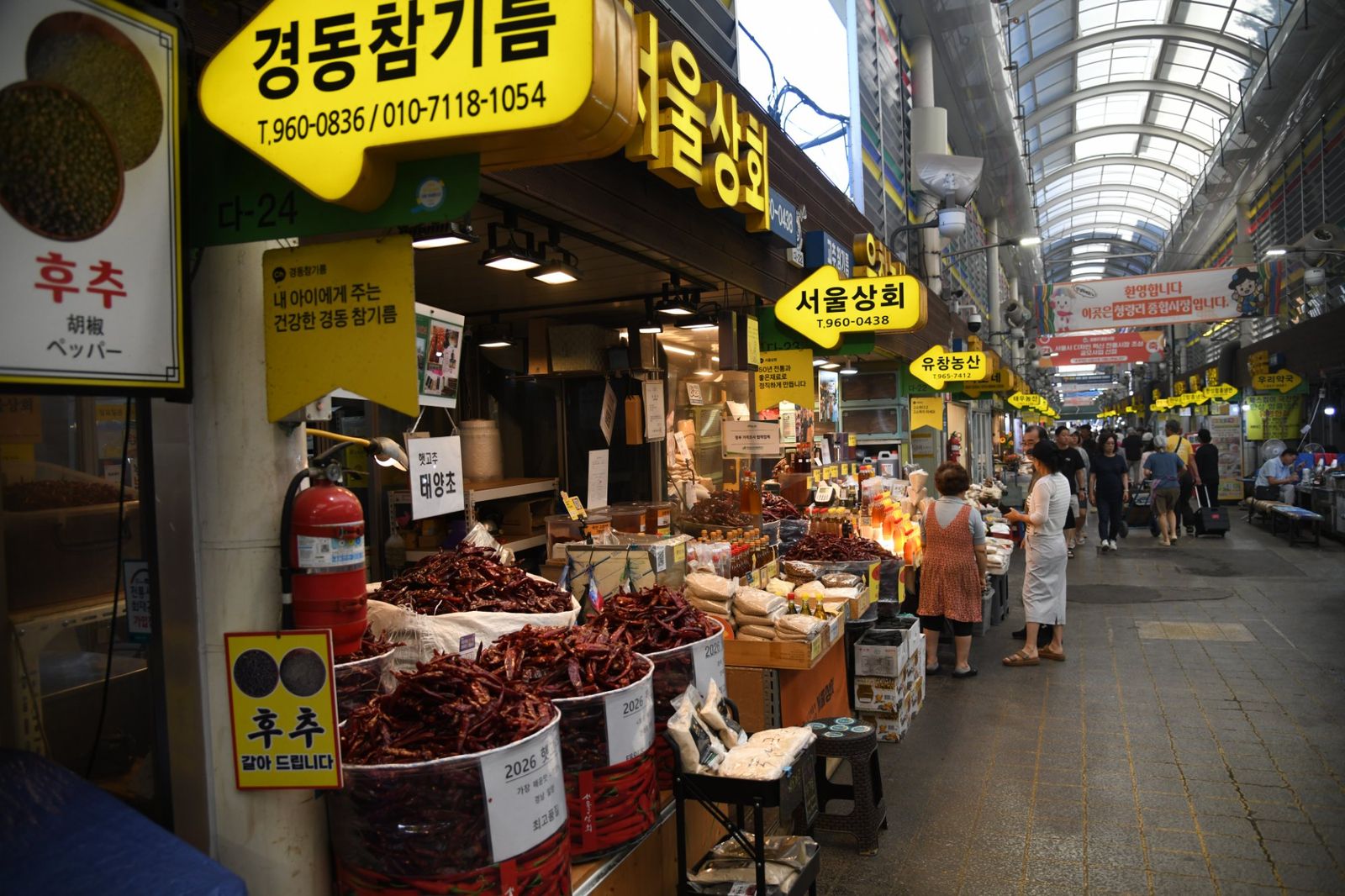
Sacks of this year's sun-dried red chilies and a fresh sesame oil stall under the covered arcade of a traditional market in Cheongnyangni, Seoul
This year’s sun-dried chilies and fresh-pressed sesame oil in Cheongnyangni, Seoul

Walk under the arcade roof and the whole pantry is laid out in front of you: open sacks of dried red chilies labelled with the year’s harvest, beans and grains by the scoop, sesame oil pressed in the shop that morning, tubs of fresh tofu, and crocks of doenjang and gochujang.

Look for the sign Taeyangcho (태양초): chilies dried in the sun rather than by machine, the slow way. Many stalls will grind chili or sesame for you on the spot, and most sellers are happy to tell you what is good this week and how they would cook it.

Good to know Go in the morning, when the stalls are fullest. Carry some cash for smaller stalls. Toasted gim and vacuum-packed sesame seeds travel well; check your airline’s rules before packing oils or pastes.

  • Gyeongdong Market경동시장

    Seoul’s great market for dried chilies, grains, sesame and herbal medicine, running into Cheongnyangni Market next door. The photo above was taken in this market district.

  • Gwangjang Market광장시장

    Central Seoul’s best-known food market: easy to reach, and good for tasting as you shop.

  • Your local sijang동네 시장

    Almost every Korean town has one. Ask your host or search “시장” on a map app.

FAQ

Korean ingredients: FAQ

What are the essential ingredients in Korean cooking?

Soybean, red chili, garlic, napa cabbage and sesame form the backbone of the Korean kitchen. Fermented from these come doenjang (soybean paste), ganjang (soy sauce) and gochujang (chili paste), the three seasonings behind most Korean dishes.

What is Korean slow food?

Food made with time rather than machines: soybeans fermented into jang over months, chilies and seaweed dried in the sun and wind, kimchi aged in crocks. Because industrialisation came to Korea comparatively late, these methods are still part of everyday cooking, not a revival.

Why is soybean so important in Korean food?

Soybean becomes tofu, soy sauce, soybean paste and the cold noodle soup kongguksu. Fermenting soybeans into jang was historically how Korean households stored protein and seasoning through the winter, and the practice is still alive today.

What is Hanwoo beef?

Hanwoo (한우) is Korea’s native cattle breed. It is prized for fine, evenly distributed marbling and is graded from 1++ down to 3. It is usually grilled simply over charcoal so the flavour of the beef itself comes through.

What is gim?

Gim (김) is laver seaweed, harvested from sea farms in the cold months and pressed into thin sheets to dry. Brushed with sesame or perilla oil, salted and toasted, it is eaten with rice, rolled into gimbap, or snacked on straight from the packet. It also makes an easy, light souvenir to take home.

Where can I buy Korean ingredients in Seoul?

A traditional market (시장, sijang) is the best place. Gyeongdong Market in Dongdaemun-gu is Seoul’s great market for dried chilies, grains, sesame and herbal medicine, and Gwangjang Market in Jongno is the easiest to reach from the city centre. Vendors will tell you what is at its peak that week, and many will grind chili or sesame for you on the spot.

Journal

Ingredient stories from Korea

One ingredient at a time: the dishes it becomes, where to eat them, and recipes to try at home.

Scroll to Top