Ondol
온돌 · underfloor heating
The floor is the heating
Heat runs beneath the stone floor, so the warmest spot in January is where you lie. Many visitors say it is their best sleep in Korea, and it is why a hanok suits winter better than summer.

Ten ways to stay in Korea, and only two need booking before you fly: a hanok, and a night in a working temple. The other eight can wait until you land (in peak travel season, check availability ahead for those too).
Scroll DownBukchon북촌 Hanok roofs in central Seoul at dusk — when the tiles go dark and the paper doors start to glow.
A letter on where to sleep
There are more ways to spend a night in Korea than you might think.
When I lived in Tulsa, I would sometimes drive four hours to Dallas just to shop at H-Mart. Driving back the same day was exhausting, and as a grad student I couldn’t bring myself to pay for a hotel. I was about to sleep in the car when I spotted a jjimjilbang, a Korean bathhouse. Inside, plenty of Americans were bathing and then settling down to sleep. It had quietly become a local favourite.
Looking back, a jjimjilbang is a wonderfully strange place. A hot bath, a cold glass of sikhye (식혜) afterwards, and a room full of strangers sprawled out asleep, and somehow it feels safe. (Keep your phone close, though. Ten years ago nobody would have picked up a sleeping person’s phone; I’m not so sure now.)
When you come to Korea, stay late at a jjimjilbang at least once, alongside a hanok, a pension or a night of glamping. Where you sleep can be part of the trip.
Jisup Shin
A hanok is a traditional Korean house of wood, paper and clay tiles. Staying in one is less about the room and more about the house itself.
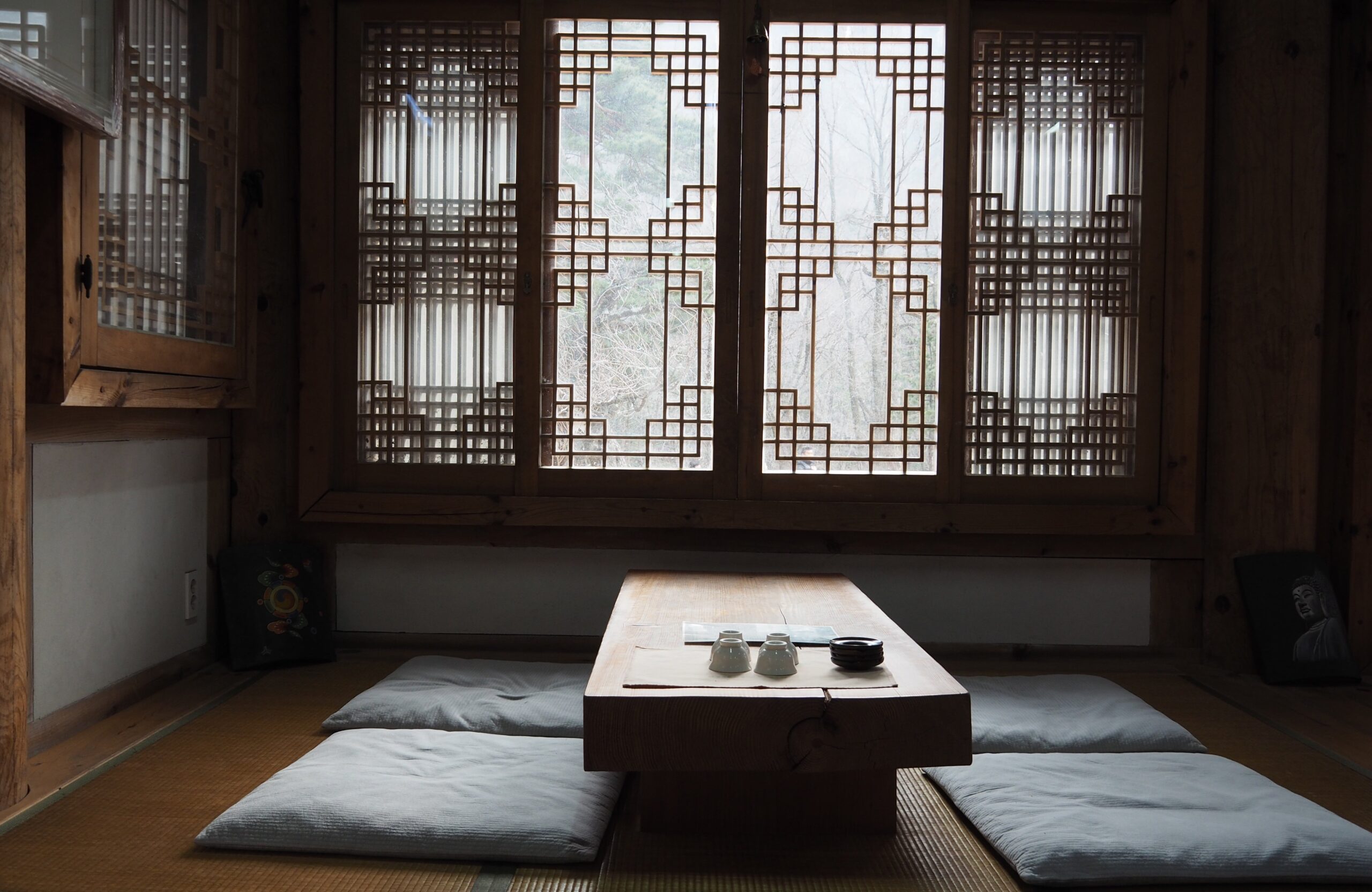
Single-storey, timber-framed, built without nails, around a courtyard kept empty on purpose. Most are a century old with interiors rebuilt in the last twenty years: original frame, modern plumbing.
You sleep on a thick mattress on a floor warmed from below, and the morning light comes in softened by paper doors.
Heat runs beneath the stone floor, so the warmest spot in January is where you lie. Many visitors say it is their best sleep in Korea, and it is why a hanok suits winter better than summer.
Swept earth or pale sand, kept empty on purpose. It bounces daylight into the rooms and draws cool air through the house. Every door opens onto it.
Hanji over a wooden lattice lets light in and keeps wind out, but it carries every sound. Worth knowing before booking two rooms for a family.
Clay tiles in alternating rows channel the rain and lift the eaves at the corners. The eaves block the high summer sun and let the low winter sun in.
The bathroom is often across the courtyard, which is a different matter at 2 a.m. in January. Ask whether it is en suite; photos rarely show it.
A mattress on a heated stone floor is firm. Book it mid-trip rather than your first night, once you know how your back feels about it.
Raised thresholds, low lintels and steep steps up to the 마루, and rarely a lift or ramp anywhere.
A hanok is a house that has been preserved. A mountain temple never stopped working, and for one night you keep its hours.

Around 140 temples run overnight programmes through the national scheme, about 30 of them in English. You get cotton work clothes, a mat on the floor, and the temple’s timetable.
A relaxed stay gives you the meals, the bell and the mountain, and leaves you alone. A structured stay puts you in the hall for the dawn service. The second is harder, and it is the one people remember.
Before four, a monk walks the grounds striking a wooden moktak, and the great bell follows. Forty minutes of chanting in a cold hall, then total silence. The part nobody expects to like.
Take only what you will finish, eat in silence, then rinse the bowls and drink the water. Vegetarian, with no garlic or spring onion.
Seated meditation, usually twice, thirty minutes each. Nobody expects you to be good at it. If you can’t sit cross-legged that long, ask for a chair.
Green tea with a monk in the afternoon, the one part of the day that is a conversation. Ask anything; they will ask about you too.
On a structured stay, the dawn and evening services are not optional. If you want the mountain without the timetable, pick a relaxed stay.
Two hours each way from Seoul, often with a taxi from the last bus stop. Plan it as a whole day, not an overnight detour.
Rooms are usually shared and split by gender, with mats on a heated floor. No alcohol or meat, and some temples take your phone at check-in. Bring socks.
None of these needs booking before you land, and several can be booked on the day (in peak travel season, check ahead). Rates are for two people, one night, off-peak. Still choosing an area? See where to stay in Seoul by neighbourhood.
Small, spotless, two minutes from a subway exit. The safe choice if you would rather think about the city than the room.
Near every station, open all night, no booking needed. Big TV, deep bath, and usually no window.
Dorm beds or tiny private rooms, toast for breakfast. Come for the common room; if you won’t use it, book elsewhere.
A whole house by the sea or in the hills, with a barbecue on the terrace. Priced per house, so best for four or more. You will need a car.
A flat with a kitchen, often cheaper than two hotel rooms. Choose a registered listing; unregistered ones are the ones that get cancelled.
A kitchen and a washing machine in a residential building. Worth it from about five nights; ask for the weekly rate.
A furnished tent or cabin in the hills or by a lake, with real bedding, heating and a barbecue set up for you. Camping without the gear. You will usually need a car, and weekends fill up weeks ahead.
Not quite accommodation, but people sleep here: a shower, cotton shorts, a mat in a warm room. For a missed last train, or once, on purpose.
Yes. Most hanok have four rooms or fewer, so book two to six weeks ahead, and earlier for autumn weekends.
About ₩50–80k per person for one night, meals included. Book three to eight weeks ahead; around 30 temples run programmes in English.
Yes. Entry is about ₩12–20k and includes a shower, cotton clothes and a mat in a warm room. Keep valuables in your locker.
Business hotels, motels, guesthouses and jjimjilbangs can usually be booked the same day. In peak travel season, book everything ahead.
Stays we booked ourselves, written up afterwards.
First stories coming soon.