The lit pavilions of Donggung and Wolji pond in Gyeongju reflected in still water at dusk
Design Your Travel Korea

Where to Go Beyond SeoulBeyond Seoul,
into Korea

Two hours on a train and the country changes: a port city with mountains behind the beach, a volcanic island in the south, a thousand-year capital with royal tombs between the coffee shops, and a stretch of east coast where people surf before work. Here is where to go next.A port city, a volcanic island, a thousand-year capital and a surf coast — all within half a day of Seoul.

Scroll Down

Donggung & Wolji at dusk동궁과 월지 The pavilions of a Silla palace garden in Gyeongju, lit each evening and doubled in the pond below.

A letter from the road

Seoul is where Korea begins, not where it ends.

Most people who land at Incheon spend their whole trip inside Seoul, and I understand why. I have lived here for years and still have not run out of it. But this is a small country with fast trains, and it holds far more beautiful places than one city can show you.

Leave on a morning train and by lunchtime you can be eating fish at the edge of the sea in Busan, with the mountains at your back. A little further and there are royal tombs in Gyeongju that have sat in the middle of town for fifteen centuries, the black stone coast of Jeju, reed beds in Suncheon that turn copper in late autumn, and an east coast where people surf before work. Every region has its own food, its own accent and its own pace, and each one shows you a side of Korea that Seoul never quite does.

I will write these places up one at a time in the journal below: how to get there, how long to give each one, and where the day is best spent. Keep two nights of your trip for somewhere outside Seoul. I hope you leave having seen far more of Korea than you planned to, and that you come back for the rest.

Jisup Shin

Closer than it looks

The country is smaller
than it looks

End to end, Seoul to Busan is about 400 km — roughly London to Newcastle. Nothing on this page is more than half a day away, and the high-speed line covers most of it before lunch.

  • Seoul → Busan2h 40mKTX from Seoul Station
  • Gimpo → Jeju1h 10mFlights every 20 minutes
  • Seoul → Gyeongju2h 00mKTX to Singyeongju
  • Seoul → Yangyang2h 30mExpress coach, or 2h driving
Worth the journey

Places to go
when Seoul is done

The places travellers ask about most when they want to see Korea beyond Seoul — a port, an island, an old capital and a surf coast. Two nights is the honest minimum for any of them, and every one of them has somewhere decent to stay within walking distance of the station.

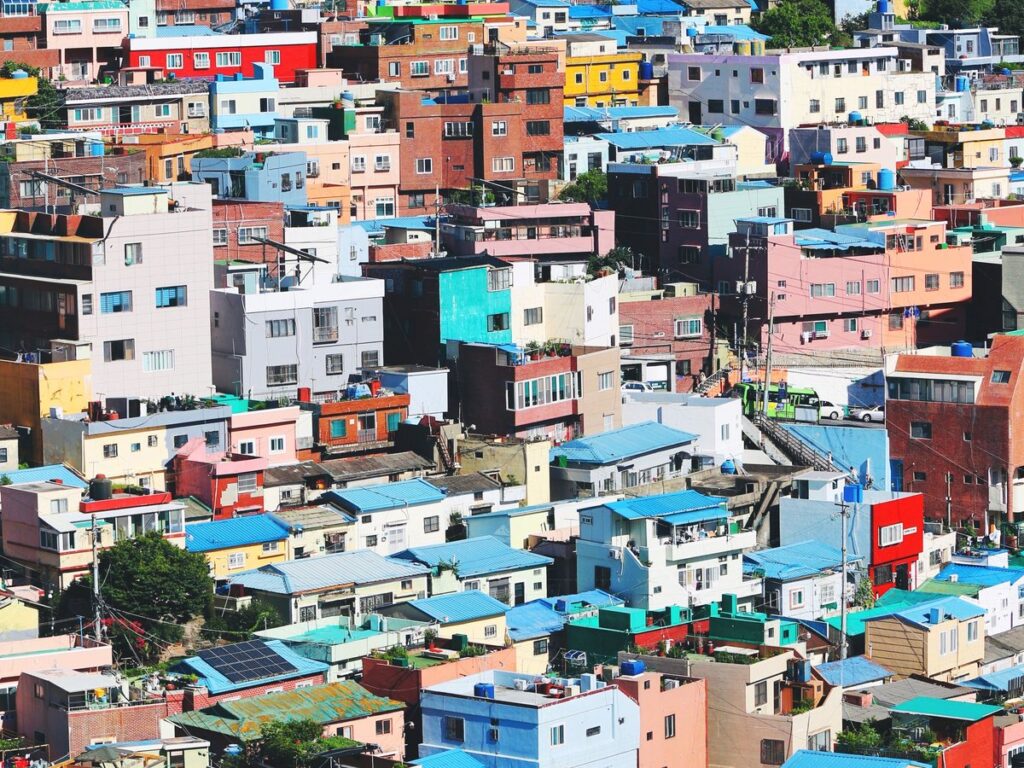
Pastel houses stacked up the hillside of Gamcheon Culture Village in Busan
South-east coast

Busan

부산

Korea’s second city keeps the mountains at its back and the sea in front, and the two are never more than a few stops apart. Mornings at Jagalchi, where you pick the fish downstairs and eat it upstairs. Afternoons on the old coastal railway line to Songjeong. Evenings under the lit span of Gwangan Bridge, with a paper cup of soju from a convenience store, which is entirely normal here.

BeachesFish marketHillside villageNight views
Give it2–3 days
Best monthsMay–Oct
Getting roundSubway
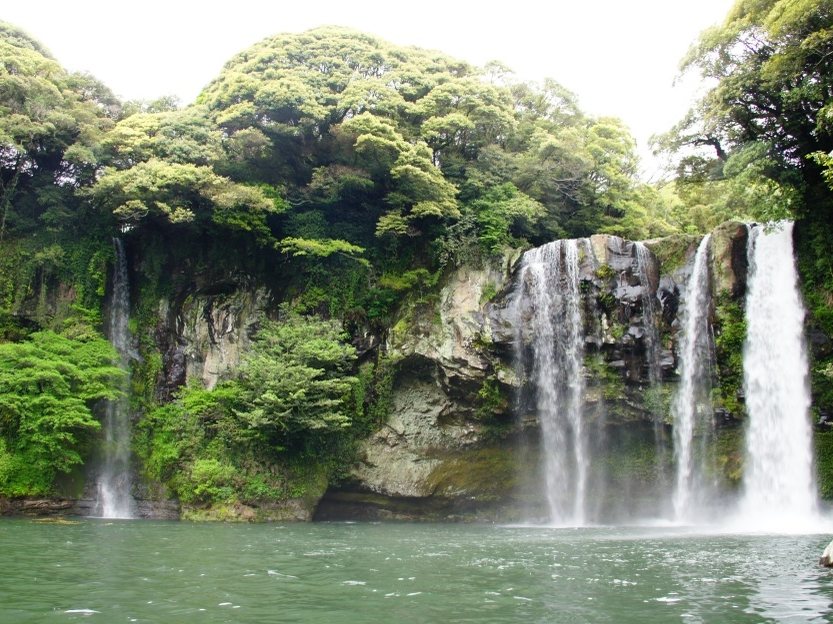
Cheonjiyeon waterfall dropping into a green pool inside subtropical forest on Jeju
Volcanic island

Jeju

제주

A volcanic island an hour and ten minutes off the ground, on what is routinely the busiest flight route in the world. Black basalt coastline, tangerine groves, waterfalls dropping into green pools behind Seogwipo, and a dormant volcano at the centre with a crater lake on top. The haenyeo still dive here for shellfish without tanks, most of them well past sixty. Hire a car — the buses go everywhere eventually, which is the problem.

VolcanoWaterfallsHaenyeo diversCoastal walks
Give it3–4 days
Best monthsApr–Jun, Sep–Oct
Getting roundHire car
The Cheomseongdae stone observatory lit at night in Gyeongju
The old Silla capital

Gyeongju

경주

Capital of the Silla kingdom for close to a thousand years, and the strangest thing about it is how casually the past sits in the street: grass-covered royal tombs the size of small hills, with a coffee shop across the road. Bulguksa and the Seokguram grotto are up the mountain; the observatory, the tombs and the lit pavilions of Wolji pond are flat, close together and best done by bicycle.

Royal tombsUNESCO templesNight lightingCycling
Give it2 days
Best monthsApr, Oct–Nov
Getting roundHire car, taxi or bicycle
Surfers waiting on their boards off the east coast of Korea at sunset
East coast surf

Yangyang

양양

The east coast stretch that Korean twenty-somethings drive two hours for. Surf schools and board hire line the sand at Jukdo and Hajodae, the water is warm enough from July to September, and the beach bars stay open long after the sun has gone. Naksansa sits on the cliff just south with a stone Kwan-eum facing the sea, and Seoraksan — the country’s best-known mountain park — is forty minutes north.

SurfBeach barsCliff templeSeoraksan
Give it2 days
Best monthsJul–Sep
Getting roundLocal bus, taxi
Quieter than the guidebooks

Places most visitors
never reach

Smaller towns, longer journeys, and almost no English on the menu — which is rather the point. Any of these works as a night on the way somewhere else, or as a day trip from the nearest city.

The terraced gardens of Oedo Botania above the sea off Geoje

Geoje

The country’s second largest island, an hour from Busan across a bridge. Boats leave for Oedo, a private rock a couple spent decades planting into a subtropical garden, and swing past the sea-cliffs of Haegeumgang on the way back.

Bus from Busan · 1h, then ferry
Tiled and thatched roofs of Hahoe folk village seen from the Buyongdae cliff in Andong

Andong

Hahoe village sits inside a river bend and is still lived in rather than preserved. Mask dances in the afternoon, braised chicken in the market, and a soju strong enough to explain both.

Bus from Seoul · 3h
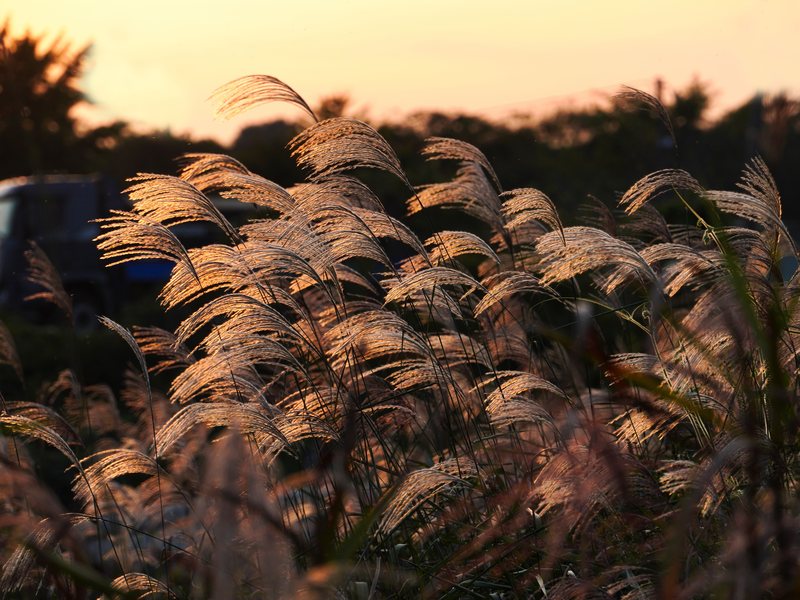
Reed plumes catching low sunlight at Suncheon Bay

Suncheon

A tidal wetland of reed beds that turn copper in late autumn, with cranes wintering in the mud. Climb the hill at the far end an hour before sunset and stay for it.

KTX from Seoul · 2h 40m
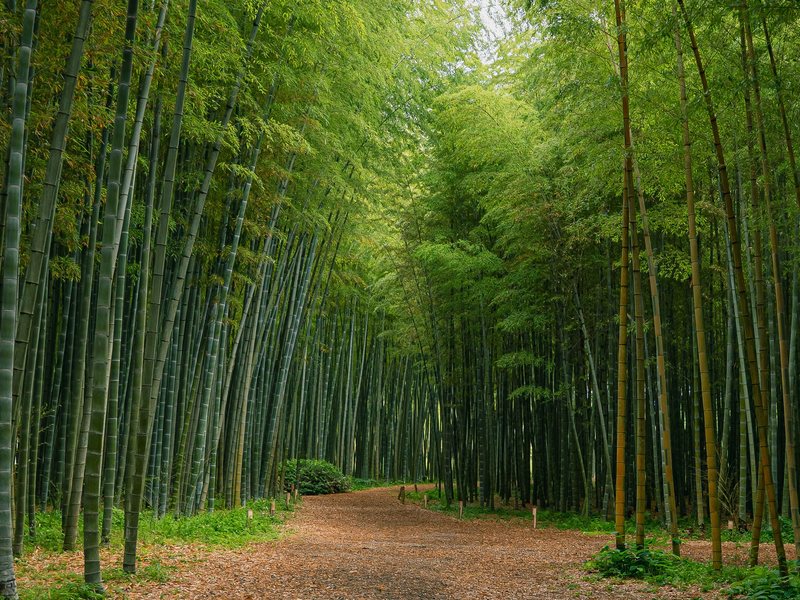
A path running through the bamboo forest of Juknokwon in Damyang

Damyang

A bamboo forest you walk through rather than look at, and a two-kilometre avenue of metasequoia planted as roadside trees in the seventies. Cool by several degrees in August.

Bus from Gwangju · 40m
A Bronze Age table dolmen standing in a field on Ganghwado

Ganghwado

Ninety minutes west of Seoul, and the tide goes out for what looks like a mile. Bronze Age dolmens stand in open fields, squat sea forts guard a strait that foreign fleets twice tried to force, and on a clear day the north shore looks straight across at North Korea.

Bus from Seoul · 1h 20m
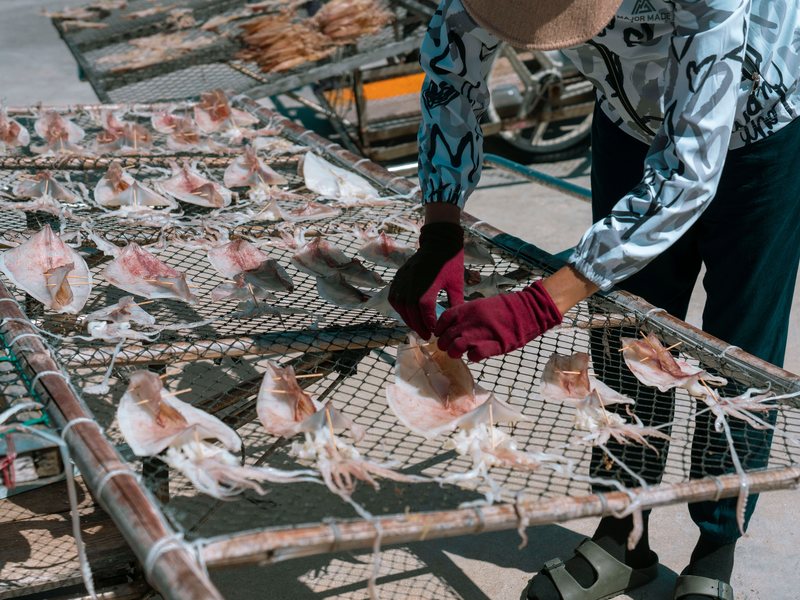
Squid laid out to dry on racks at a harbour on Ulleungdo

Ulleungdo

A volcanic rock in the East Sea, three hours out by ferry, with a road cut into the cliffs and squid drying on every rail. Rough seas cancel sailings, so leave a spare day.

Ferry from Gangneung · 3h

Also worth the detour, when you have longer — 전주 Jeonju for the hanok quarter and the food, 여수 Yeosu for the night harbour, 강릉 Gangneung for coffee by the sea, 보성 Boseong for the tea terraces, 남해 Namhae for the coast road.

Asked the week before flying

Questions about travelling
beyond Seoul

Is it worth leaving Seoul on a short trip to Korea?

Yes, and it costs less time than people expect. The high-speed train reaches Busan in under three hours and Gyeongju in about two, so even a five-day trip can hold two nights elsewhere. The country changes quickly once you are out — different food, different accent, different pace.

What is the easiest day trip from Seoul?

Gangneung on the east coast, about two hours by KTX, for the sea and a street of coffee roasters. Suwon is closer still — an hour on the metro — for a walled fortress you can walk the whole way round in an afternoon.

Do I need to speak Korean outside Seoul?

Station signs, train announcements and major attractions are bilingual everywhere. Small restaurants often are not. A translation app handles menus, and pointing works better than you would think. Younger staff in tourist towns usually have some English.

Which map app works in Korea?

Naver Map or Kakao Map. Google Maps shows the country but cannot give driving directions here, and its transit and walking data is patchy outside the capital. Both Korean apps have English interfaces and both give live bus arrivals.

Is a Korail Pass worth buying?

Only if you are making three or more intercity journeys within a few days. It is sold to foreign passport holders and covers KTX seats, but for a single Seoul–Busan return it is cheaper to book individual tickets in the Korail app. Reserve a week ahead for holiday weekends.

Does my T-money card work outside Seoul?

On city buses and subways in most of the country, and in convenience stores as a payment card. It does not cover the KTX or intercity coaches, which need a separate ticket. Top it up at any convenience store counter.

Journal — beyond Seoul

Notes from
the road

Places outside the capital worth the train ride, written up one at a time.

First stories coming soon.

Photographs of Gyeongju, Jeju, Geoje, Ganghwado and Andong — 한국관광공사 Korea Tourism Organization

Scroll to Top